Welcome to my blog on Quality, elearning, OER, OEP, OEC, and user generated content (UGC)


The posts in my blog will be both in English and Swedish.
Blogposterna kommer att vara både på svenska och engelska.

Tuesday, August 7, 2012

Certified OER Practitioner

OER Services

Together with Rolf Reinhardt and Andreas Link and an international committee I have developed the Certified OER Practitioners course, OER - Services which we are now piloting. The version is currently revised and later published on the wikieducator. One task is to blog about it, so here it comes:


Open Educational Resources (OER) are teaching, learning or research materials that are in the public domain or released with an intellectual property license that allows for free use, adaptation, and distribution. UNESCO believes that universal access to high quality education is key to the building of peace, sustainable social and economic development, and intercultural dialogue. Open Educational Resources (OER) provide a strategic opportunity to improve the quality of education as well as facilitate policy dialogue, knowledge sharing and capacity building.The OER movement started in 2002 with MIT and UNESCO, aiming to provide edcuation for free around the world.

OER Services.... provide a holistic and participatory service network for all OER stakeholders worldwide. "With OER Services, the creation, use, re-use and facilitation of collaborative education becomes professional. Free access to online learning material and increasing quality of educational resources through peer-creation and transparency: These are the promises which boosted the topic "OER" upfront. However, many questions are remaining still unclear - even years after the first OER initiatives have started. At the moment, there are no business models created which have proven their success in non-funded environments. This is where we are starting: With us thriving on collaborative education becomes professional." Andreas Link, Director of OER Service.

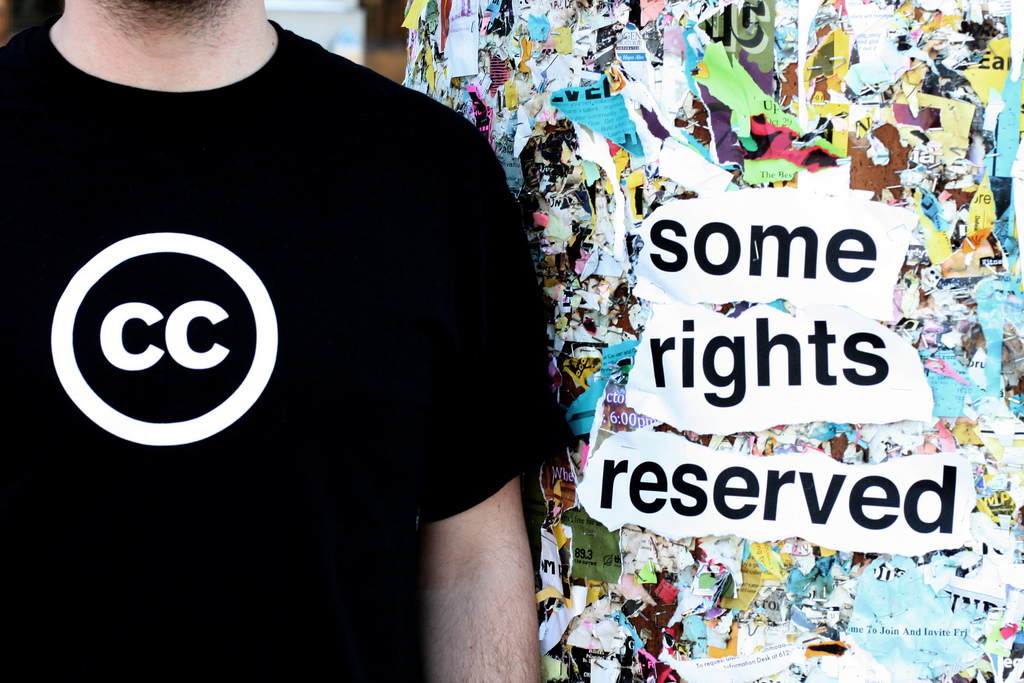
One prerequisite for OER  is Creative Commons licencing. On the creative commons wiki which is available in almost all languages further information can be followed up as well as the YouTube clip below.

 
What we're learning from online education:
Daphne Koller is enticing top universities to put their most intriguing courses online for free -- not just as a service, but as a way to research how people learn. Each keystroke, comprehension quiz, peer-to-peer forum discussion and self-graded assignment builds an unprecedented pool of data on how knowledge is processed and, most importantly, absorbed. Daphne Koller is bringing courses from top colleges online, free for anyone who wants to take them. Until now some 640 000 students are taking part of worldwide professional education with NO costs.

We should spend less time at universities filling our students' minds with content by lecturing at them, and more time igniting their creativity … by actually talking with them.” (Daphne Koller)

There is also already the OER University, The OER university is a virtual collaboration of like-minded institutions committed to creating flexible pathways for OER learners to gain formal academic credit. There is also the Kahn Academy just to mention some of teh large actors in the OER global arena.


 Where do you like to head...
What are your goals, desires and learning goals/dreams Take the chance and get the best learning possibiliteis globally, with OER....

Education Without Limits!

Friday, July 20, 2012

Is it time to re-think transition into a digital and networking knowledge based society


A report from the Work Foundation in the UK concluded that young people not in employment, education or training lacked not only formal qualifications, but the 'soft skills' needed in today's economy such as communication. Literacy skills for the twenty-first century are skills that enable participation in the new communities emerging within a networked society. Skills that enable students to exploit new simulation tools, information appliances and social networks; skills that facilitate the exchange of information between diverse communities and the ability to move easily across different media platforms and social networks (Jenkins et al, 2006, p. 55). The transition into a digital and networking knowledge based society is set to continue, and requires new skills sets. Meanwhile, traditional and digital technologies are converging and becoming more integrated; and changing how we find, use, present and understand information. All of these will require new literacies not only for work but for living a fulfilled life, coping with the new complexities of our societies, and engaging as a citizen. Learning traditions of the past will not adequately equip students for the unimagined literacies of the future. Thus, edcuational settings and paradigms has to be changed and there are urgent needs for innovative, creative trasitions for learning and to acknowledging the social context for change and thinking outside traditional boxes.


 By freeflyer09
  
Sheila Moorcroft argued in her blog 19/06/2012 on What Does It Mean To Be Literate In The 21st Century? that transliteracy has been coined to highlight the need to be able to 'read and understand' concepts and ideas across a growing range of formats and platforms - oral, print, visual, digital - as technologies merge and integrate, enabling radically new approaches to presentation, verification and distortion of content. They focus ever more on critical thinking, the ability to question, analyse, challenge; seeing arguments from different perspectives; articulating ideas. She finished her blog post with: The question will be what skills, taught where, when, how and by whom? Soft skills and the new literacies will need to be part of the process.

Leu et al (2004) point out that changes in how literacy is defined and taught must be considered within today’s social context. They identify three forces at work to change the nature of literacy:
  • global economic competition within economies based increasingly on the effective use of information and communication
  •  the rapid emergence of the Internet as a powerful new technology for information and communication
  • public policy initiatives by governments around the world to ensure higher levels of literacy achievement including the use of the Internet and other information and communication technologies (ICT) (p.1575).

In order to maximise the teaching and learning potential of technology, it is often argued that students need to learn:
• how to be critical and informed users of technology
• to locate, evaluate and synthesise information
• to interact safely and responsibly online
• to make informed choices when creating texts, considering how purpose audience, contexts and    choice of medium influence texts.

This is exactly what IPTS and JRC (Redecker,  Leis,  Leendertse, Punie,  Gijsbers, Kirschner,  Stoyanov and Hoogveld, 2010) are addressing in The Future of Learning Preparing for Change. They argue for the overall vision for learning in the 21st century is personalisation, collaboration and informalisation. They also semphazise inclusion, participation and engagement both in educational and employment settings and contexts.


From: newequitypartners.org


A social revolution is underway and on nearly every ones confession, as homes and workplaces embrace the use of digital technology as a normal part of everyday life, but... 
...what are we doing with this knowledge? and how are we working towards this transition and paradigm shift especially in education, all from K-12 to Universty education and research and LLL?


Thursday, July 19, 2012

Will MOOC’s Forever Change Higher Education?


An interesting movement seems to be on its way. The OER (Open Educational Resources) and OEP/OEC (Open Educational Pracitce and Culure) development, the launch of MOOC and open badges seems to be driving forces. Now it is happening in Universities as well.
wrote yesterday on July 18, 2012, under the heading Will MOOC’s Forever Change Higher Education? that Massive Open Online Courses, or MOOCs, are expected to draw millions of students and adult learners from around the world. Will we now see with MOOC that Universities are Reshaping Education on the Web. What is  a MOOC then?

 
As part of a seismic shift in online learning MOOC is reshaping higher education, Coursera, a year-old company founded by two Stanford University computer scientists,  announce that a dozen major research universities are joining the venture. In the fall, Coursera will offer 100 or more free massive open online courses, or MOOCs, that are expected to draw millions of students and adult learners globally.  

Ramin Rahimian for The New York Times
Daphne Koller and Andrew Ng of Stanford are adding 12 universities to Coursera, the online education venture they founded.

So far, MOOCs have offered no credit, just a “statement of accomplishment” and a grade. But the University of Washington said it planned to offer credit for its Coursera offerings this fall, and other online ventures are also moving in that direction.  To earn credit, students would probably have to pay a fee, do extra assignments and work with an instructor. Finally maybe the Open Badge movement by Mozilla will become a reality

cityofbelvedere.org


OCL4Ed12-06

I have recently, 20 June – 3 July 2012, attended the workshop  OCL4Ed12-06

 
Creative Commons swag contestThe free online workshop on open education resources (OER), copyright and Creative Commons licensing was a really fantastic intitiative with  fantastic resourses from all over the world. The workshop aimed to set a new world record -- collaborating on the world's largest capacity building initiative on open content licensing in the formal education sector.

The workshop and resources was sponsored by the OER Foundation, COL Chair in OER at Otago Polytechnic and UNESCO-COL Chair at Athabasca University)

There were participants from all over the world, over 500 participants from some 80 countries. What a learning resourse and environment! ...and direct feedback on forums from peers and from experts throughout the globe.

Knowledge is a public good. By using OER  a return to the core values of education, namely to share knowledge freely can become true. The workshop is also availabel at http://wikieducator.org/Open_content_licensing_for_educators/Home

The open content materials were developed openly and collaboratively by dedicated volunteers from the OER Foundation, WikiEducator,  the OpenCourseware Consortium and Creative Commons with funding support from UNESCO.

Thanks to all develoeprs and to all co-participants!
The workshop was one of the very best one I have attended, and teh design, the resourses and the online feedback.

Let the OER remix begin!
Let the open educational practice and culture develop and grow globally....

Wednesday, July 18, 2012

Lego för kreativitet eller en effektiv bromskloss?

Så gott som i alla barnfamiljer finns legoklossar och färdiga byggsatser med diverse olika tema, beroende på ålder och intresse i familjerna. Anders Milder  skriver i SDS den 11 juni 2012 om Fabriker och mallade drömmar som fokuserar på "att slå vakt om den traditionella skolan är en effektiv bromskloss för kreativitet , innovation och egensinnighet." (Milder, SDS B4).

LEGO är ett system av byggelement av plast som utvecklades 1949 av dansken Godtfred Kirk Christiansen (1920-1995). Det tillverkas och säljs av det danska leksaksföretaget LEGO A/S. LEGO kommer från danskans leg godt, på svenska "lek bra." LEGO introducerade de första plastklossarna 1949 under namnet Automatic Binding Bricks. Dessa tidiga klossar såldes i askar med klossar i olika storlekar som kunden fick bygga samman efter eget huvud.

legoklossar, lego h

Photo credit: S.W. Clyde, National Scenic  
 Byways Online

Under 1990-talet befann sig Lego i kris. De lösa legobitarna i boxar sålde allt mindre. Först när ledningen bytte inriktning och satsade på byggsatser vände utvecklingen och företaget kunde räddas. Sedan 2000-talet har LEGO tillverkat en rad olika byggsatser med figurer och scener ur Hollywoodfilmer. I samband med premiärerna av Episod I, II och III av Star Wars-filmerna gjordes exempelvis LEGO-figurer av Luke Skywalker, Darth Vader, Han Solo med flera. Även skepp från filmerna, som Millennium Falcon har använts som förlagor till Legobyggsatser. LEGO har även gjort Legobyggsatser med Harry Potter, Indiana Jones, Spindelmannen med mera.


Skiftet i produktionen innebar att förutsättningarna för leken förändrades. Barnen gick från att skapa  utifrån sina egna huvuden och kreativitet till att följa exakta instruktioner. Legovärldarna byggs idag steg för steg – och sätter man inte samman bitarna på det sätt som står i manualen har man gjort fel skriver Mildner. Känns pedagogiken igen? Seth Godin, amerikansk författaren tar Lego som ett exempel i ”Stop Stealing Dreams” – ett försök att starta en bred debatt om hur skolan måste omformas. För varför är det egentligen lättare att sälja byggsatser än lösa bitar i en tid som vår? Kanske eftersom instruktionsmanualskulturen svarar exakt mot vad föräldrarna förväntar sig av sina barn och vad barnen har drillats till att göra i skolan. Godin skriver: Vi går in i en tid där idéer och nytänkande kommer att vara fullständigt avgörande. Ändå lär vi dagens unga att det viktigaste är att de följer mallar och instruktioner. Han för det så långt att kanske har ekonomin i och med detta förändrats för alltid.
                                                                                    
lego stad - arbetstagarelego stad - arbetstagarelego stad - arbetstagare

David Weinberger har påpekat att den smartaste personen i ett rum inte längre är den som står längst fram och föreläser. Eller ens den kollektiva kunskapen som finns bland personerna som sitter och lyssnar. Nej, den smartaste personen i rummet är rummet självt, det nätverk som sammankopplar människorna och tankarna som finns där med dem som befinner sig utanför. Frågan är då: hur bygger vi sådana smarta rum? Eller kanske: vad händer med de barn som inte får tillgång till sådana? Detta är inte något som dagens skola ens försöker besvara. Liknande tankegångar tas upp i A New Culture of Learning by Douglas Thomas and John Seely Brown. De fokuserar på kollaborativt lärande och tar upp spel och spelmiljöer som lärande miljöer. Det kollaborativa lärandet är också något som Downes och  Siemens förespråkar o konnektivsmen som lärandets teori.


Istället för nytänkande inom utbildning slås vakt om den traditionella utbildningen som institution. Lärandefabriker skapas som fjärmar sig från utvecklingen i resten av samhället, där skolans definition av kunskap mer och mer handlar om i vilken grad eleverna förmår att anpassa sig till systemet. Seth Godin lyfter fram vikten av drömmar. Hur lär vi våra barn och oss själva att bry oss att förverkliga dem? Hur skapar vi lärande miljöer som inte dödar drömmar utan istället när dem – tillsammans med egenskaper som ibland kallas generella kompetenser, för övrigt målområden som framförs inom EU. Egenskaper som inte är mätbara såsom kommunikationsfärdigheter, innovation, mod, stolthet, kunskapstörst och vilja?

Milder, såom flera andra runt om i världen debatterar såledeses att man med rätta kan fråga sig vad vår syn på skolan egentligen säger om oss. Att vi istället för att omformulera vår syn på lärandet ägnar vår tid till att bygga en så effektiv bromskloss som möjligt för kreativitet, innovation och egensinnighet genom att ständigt betona och belöna helt andra saker. 


Power Searching with Google and What would Google do?.

I have just attended the excellent online, selfinstructed course by Google on effecient searching on Google... and again Google have done it! 
I really learned a lot by the course Power Searching, and part of a new world in Google just was opened up to me.


Google Search makes it amazingly easy to find information.Learn together with Daniel Russel  (Google Inc.) about the powerful advanced tools that Google provide to help you find just the right information when the stakes are high.

Daniel Russell
Senior Research Scientist
Google, Inc.


The online course are divided in six parts:
  • Introduction
  • Interpreting results
  • Advanced tetechniqies
  • Find facts faster
  • Checking your facts
  • Putting it all together
All part  consists of very informative and motivating film clips (3-7-10 minutes), tasks, with self-corrections and feedback and forum with direct emails to your google accout. Tthe course have three self-assessments:
  • Pre-class assessment
  • Mid-class assessment
  • Post-class assessment
I will strongly recommed to go through the course. I really learned a lot, which I can use from now on in my daily life and for professional use. I am sure that my search results will be more precise and useful from now on. The course-design is very attractive and you really keep the motovation on top.
Will you organise an online course similar like this it is  a very attractive format.

So Google has done a success again!!!
So has also Jeff Jarvis done with his book WWGD , What Would Google Do?
In nearly any question you can ask  What would Google do? 
 ... and sooner or later you will know
....or you can always search for it, when you know effecient searching methods and tools, and then spend your own time to reflect on it  and just do it....


 So we  all need to ask as Jarvis is doing: What would Google do?
What would Google do?


What,s the question every business should be asking itself? According to Jeff Jarvis, it,s WHAT WOULD GOOGLE DO? If you,re not thinking or acting like Google - the fastest-growing company in the history of the world - then you,re not going to survive, let alone prosper, in the Internet age. An indispensable manual for survival and success that asks the most important question today,s leaders, in any industry, can ask themselves: What would Google do? To demonstrate how to emulate Google, Jarvis lays out his laws of what he calls "the new Google century," including such insights as: Think Distributed Become a Platform Join the Post-Scarcity, Open-Source, Gift Economy The Middleman Has Died Your Worst Customers Are Your Best Friends and Your Best Customers Are Your Partners Do What You Do Best and Link to the Rest Get Out of the Way Make Mistakes Well ...and More He applies these principles not just to emerging technologies and the Internet, but to other industries-telecommunications, airlines, television, government, healthcare, education, journalism, and yes, book publishing-showing ultimately what the world would look like if Google ran it. The result is an astonishing, mind-opening book that will change the way readers ask questions and solve problems.

The Author about his book: "what I tried to do in the book is reverse-engineer the success of Google and tried to find out the lessons and the laws that have made Google so successful in this new era. […] so we’ll take these lessons and apply them to all kinds of companies. It’s not just about technology […] it’s about any institution in society. […] It’s about thinking differently."
We all need to ask: What would Google do?

Saturday, July 7, 2012

OER the key to global economic growth

By being adaptable and accessible, OERs have the potential to solve the global education crisis and contribute to sustainable economic growth - if governments are prepared to act.


Sioti college
OERs can be used to create a better trained, more flexible global workforce for the 21st century. Photograph: Tom Bible / Alamy/Alamy


In the Guardian Professional Sir John Daniel, knighted for his contribution to education, served as president and CEO of the Commonwealth of Learning from 2004 to 2012 and as Unesco's assistant director-general for education from 2001 to 2004 and David Killion is the US ambassador to Unesco. He led the US delegation to the World OER Congress
commented that Open Educational Resources (OER) as the key not only to solving the global education crisis but to unlocking sustainable global growth in the 21st century- that is, if governments are ready to seize on their potential.

OERs are learning materials that can be accessed, used, and transformed by anyone, anywhere. 

Though the concept is simple, the economic potential is tremendous and the advantages are two-fold: First, OERs can lower education costs substantially. OERs can also help universities reduce their marketing costs. Open resources have been a boon for recruitment: 35% of MIT applicants tell their admissions office that they chose MIT after they looked at its OpenCourseWare. Open resources can also help bolster a school's global reputation: 91% of visitors to Open University's page on iTunes U are from outside the UK.
But what was crystallised at the Unesco Congress are the larger economic implications of the OER movement and its potential to dramatically expand the global knowledge economy. By making education more accessible and adaptable to the changing needs of the global economy.
Alredy there is mounting evidence that learners can be trained more quickly using OER. A recent study conducted by scholars associated with Carnegie Mellon University's Open Learning Initiative demonstrated that students who use OERs can obtain the same or better learning outcomes in half the time compared with students using traditional methods. This means that OERs can be used to create a better trained, more flexible global workforce for the 21st century.
The OER movement has been steadily gaining momentum since its inception, as more and more individuals and institutions discover its extraordinary potential. Over 400,000 teachers have benefited from the Teacher Education in Sub-Saharan Africa program, whilst the Open University's OpenLearn website has had more than 21 million visits since its launch in 2006. One by one, the world's most prestigious universities are launching new OER initiatives. In May, Harvard University announced it would join forces with the MIT to create edX, a platform that provides free access to rigorous online courses to students anywhere in the world. Stanford University is planning a similar venture.
Initiatives like these are remarkable, but higher education activities can only go so far. Governments are by far the biggest suppliers of education worldwide. They have the most to contribute to the OER movement and the most to gain in terms of cost savings and economic growth.
The first Unesco World OER Congress concluded with a declaration that urged governments to play a more active role in supporting this movement, which has, to date, been largely funded by a few supportive foundations. This call to action is about more than education. It is about widening the circle of those able to contribute to renewed economic growth. Governments around the world would do well to heed that call. 
I wrote about the declaration in my blogpsot

The Paris Declaration 2012 - OER

The Paris Declaration was approved on 22 June 2012, in Paris, France at the World OER Congress by acclamation by a gathering of more than 250 people, with many governments represented. The UNESCO Expert Meeting had both governments, educational and OER experts present. The Declaration represents the advice of the 'experts' to governments, on which it is non-binding.  

The term Open Educational Resources (OER) was coined at UNESCO’s 2002 Forum on Open Courseware: OER is understoood as:

 “teaching, learning and research materials in any medium, digital or otherwise, that reside in the public domain or have been released under an open license that permits no-cost access, use, adaptation and redistribution by others with no or limited restrictions. Open licensing is built within the existing framework of intellectual property rights as defined by relevant international conventions and respects the authorship of the work”; 

The declaration recommends that States, within their capacities and authority:
  • Foster awareness and use of OER
    Promote and use OER to widen access to education at all levels, both formal and non-formal, in a perspective of lifelong learning, thus contributing to social inclusion, gender equity and special needs education. Improve both cost-efficiency and quality of teaching and learning outcomes through greater use of OER.
  • Facilitate enabling environments for use of Information and Communications Technologies (ICT)
    Bridge the digital divide by developing adequate infrastructure, in particular, affordable broadband connectivity, widespread mobile technology and reliable electrical power supply. Improve media and information literacy and encourage the development and use of OER in open standard digital formats.
  • Reinforce the development of strategies and policies on OER
    Promote the development of specific policies for the production and use of OER within wider strategies for advancing education.
  • Promote the understanding and use of open licensing frameworks
    Facilitate the re-use, revision, remixing and redistribution of educational materials across the world through open licensing, which refers to a range of frameworks that allow different kinds of uses, while respecting the rights of any copyright holder.
  • Support capacity building for the sustainable development of quality learning materials
    Support institutions, train and motivate teachers and other personnel to produce and share high-quality, accessible educational resources, taking into account local needs and the full diversity of learners. Promote quality assurance and peer review of OER. Encourage the development of mechanisms for the assessment and certification of learning outcomes achieved through OER.
  • Foster strategic alliances for OER
    Take advantage of evolving technology to create opportunities for sharing materials which have been released under an open license in diverse media and ensure sustainability through new strategic partnerships within and among the education, industry, library, media and telecommunications sectors.
  • Encourage the development and adaptation of OER in a variety of languages and cultural contexts
    Favour the production and use of OER in local languages and diverse cultural contexts to ensure their relevance and accessibility. Intergovernmental organisations should encourage the sharing of OER across languages and cultures, respecting indigenous knowledge and rights.
  • Encourage research on OER
Foster research on the development, use, evaluation and re-contextualisation of OER as well as on the opportunities and challenges they present, and their impact on the quality and cost-efficiency of teaching and learning in order to strengthen the evidence base for public investment in OER.
  • Facilitate finding, retrieving and sharing of OER
Encourage the development of user-friendly tools to locate and retrieve OER that are specific and relevant to particular needs. Adopt appropriate open standards to ensure interoperability and to facilitate the use of OER in diverse media.
  • Encourage the open licensing of educational materials produced with public funds
    Governments/competent authorities can create substantial benefits for their citizens by ensuring that educational materials developed with public funds be made available under open licenses (with any restrictions they deemnecessary) in order to maximize the impact of the investment. 
Ed Yourdon, CC-BY-SA
Some questions to start with:
How will individuals around the globe benefit from the recommenndations and how can the implementation and mainstreaming speed up?

What are now the next step for countries around the globe to adopt the recommendations?

Could/or should the recommendations be benchmarks for policy uptake as is suggested by the POERUP project?

Thursday, July 5, 2012

What is a 21st century teacher?

There is an ongoing discussion in the edcuational sector on the millenium learners, next generation learners, Gen Y, 21st century learners etc, a  beloved child has many names..Main issues which use to be expressed and discussed are as is done by OECD already in 2006:

The main issues used to be addressed  are the following  by OECD:

So who are they then? Millennials is a term widely used to designate those generations born from the 1980s onwards and who have been raised in a context where digital technologies form an inextricable part of daily life. In short, Millennials are the first generation to grow up surrounded by digital media, and most of their activities dealing with peer-to-peer communication and knowledge management, in the broadest sense, are mediated by these technologies. Accordingly, Millennials are thought to be adept with computers, creative with technology and, above all, highly skilled at multitasking in a world where ubiquitous connections are taken for granted. This is why they are also often referred to as the Net Generation or even the homo zappiens (Veen, 2003) for their ability to control simultaneously different sources of digital information.Veen argues for the need for New Education Systems. This is tue, and there are urgent needs for transformations of educational systems.

Homo Zappiens  
What is less discussed is the issues on what and who is the 21st century teacher? This was done in a blogpost by Joe Stumpenhorst, June 22nd 2012. Thanks for this valuable blogpost.

Stumpenhorst advocates that althoug people toss around and speak about education attaching the word 21st century to appear to cutting edge or to be on the front end of trending ideas and things are so-called 21st century, yet there are no differences from ideas fo the past, from 20th or 19th century. Stumpenhorst emphazes the role and some key characteristics that good 21st-century teachers need. To summarize
  • Be a connected educator
  • Be a master of technology
  • Be a reflective practitioner
  • Be an advocate  

Be a connected educator. The idea of being a connected educator is not necessarily new, but it is certainly transformative through the technology of social media. Teachers can connect with other teachers, administrators, parents, students and other education-minded people worldwide with the click of a button.  Regardless of what kind of tools you use, a good 21st-century teacher must be connected.
Be a master of technology.  A good 21st-century teacher knows the difference between what is shiny and new conserning technology and what truly has potential to transform learning for students. A new hammer is great, but a good carpenter doesn’t try to screw in a bolt with one. In the same way, a 21st-century teacher knows what tools are needed and when and how to use them.
Be a reflective practitioner. This is probably one of the most important areas as the profession in many ways has not changed in 100 years. Tools in our classrooms have changed, but the pedagogy and practice have not. A 21st-century teacher is able to look at his or her practices and adapt and change based on the needs of learners. The learners need to be in the centre, personalized learning, learning on demand and lifelong learning. Too many teachers are teaching as they did when they started their careers 10, 20 or 30 years ago. What we know about student learning and motivation has changed; so, too, must the art of teaching. Stagnation is the death of any teacher.
Be an advocate. The final thing  important for good teachers in this century is to be an advocate for themselves as well as the profession.  As teachers, we can sit and complain about it … or we can do something about it and find ways to tell our stories. It is a critical time in the history of education and how the profession is perceived in the public eye. 

There are urgent needs for many directions of innovation for the 21st century...

None of these ideas is radical or groundbreaking. Yet, too many teachers are content wrapping up old practice with new gimmicks and wondering the reason we don’t improve. To gain respect as a profession, a 21st-century model of constant growth and improvement must be embraced. If we don’t get better, there is just ourselfes we can blame.

Follow Josh Stumpenhorst on his blogs at Stump the Teacher, which has received EduBlog Awards nominations, and tweets @stumpteacher.